
Broadband is the always-on internet connection most UK homes and businesses rely on today. However, not all broadband is built the same. Understanding the different types of broadband can help you choose the right option for your location, usage needs and future connectivity.
Below, we break down the main broadband types available in the UK and explain which option Wildanet provides.

ADSL Broadband
ADSL (Asymmetric Digital Subscriber Line) broadband uses traditional copper telephone lines to deliver the internet. Speeds are limited and tend to slow down the further a property is from the local exchange. As the UK transitions away from copper infrastructure, ADSL is being phased out (the Copper Switch Off) and is no longer considered future-proof.
Best for: Basic internet use where fibre isn’t available.
Cable Broadband (FTTC)
Cable broadband runs through coaxial cables, often alongside TV services. It can deliver faster speeds than ADSL, but bandwidth is shared locally, meaning speeds can dip during peak usage times.
Best for: Urban areas with high cable network coverage.
Fibre Broadband
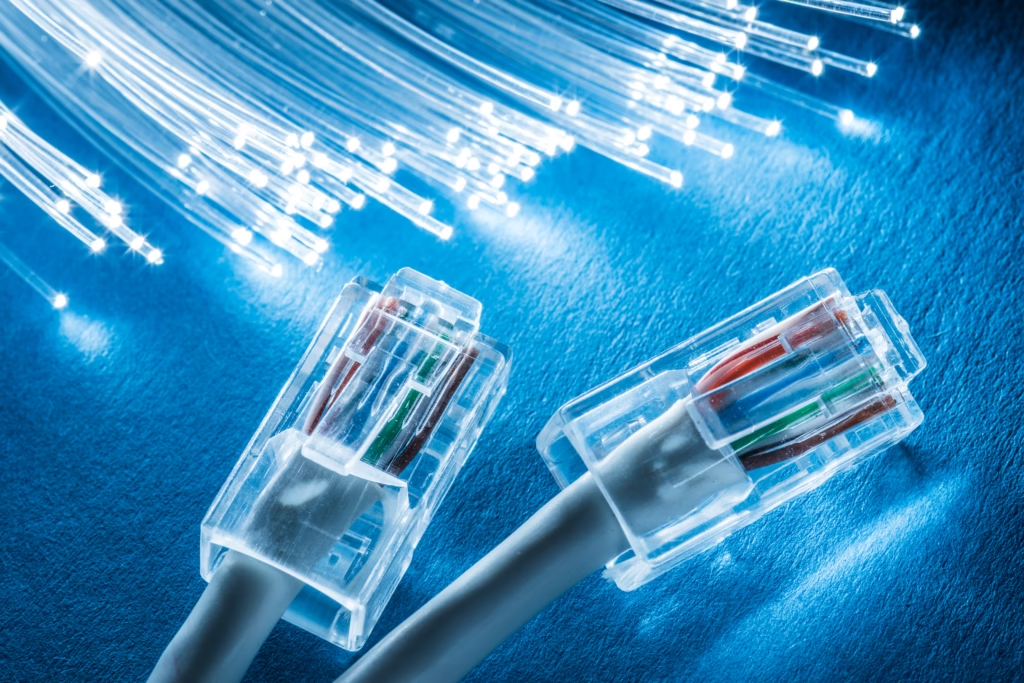
Fibre broadband uses fibre-optic cables to transmit data as light, making it significantly faster and more reliable than copper-based services.
There are two common fibre types:
- Part Fibre (FTTC) – Fibre runs to a street cabinet, then copper cables connect to the property. Faster than ADSL, but still limited by copper.
- Full Fibre (FTTP) – Fibre runs directly into the property, delivering the fastest and most stable broadband available today.
Best for: Streaming, remote working, gaming, smart homes and long-term reliability.

Wireless & Mobile Broadband
Wireless broadband uses radio signals rather than cables, including 4G and 5G networks. While useful in rural or temporary locations, speeds and reliability can vary based on signal strength, weather and network congestion.
Best for: Areas without fixed broadband infrastructure.
Satellite Broadband
Satellite broadband connects homes via satellites orbiting the Earth. It offers wide coverage, but typically comes with higher latency and slower performance, especially in bad weather and busy times. Whereas full fibre has consistent and reliable speeds due to being connected directly to the property, allowing for seamless and uninterrupted internet speeds.
Best for: Extremely remote locations with no other options.
What Types of Broadband Does Wildanet Offer?
At Wildanet, we specialise exclusively in full-fibre broadband (FTTP). This means fibre-optic cables run directly to homes and businesses, avoiding the speed and reliability issues associated with copper networks.
All residential and business packages are delivered over our full-fibre network, providing:
- Consistent high speeds
- Unlimited data
- Greater reliability than part-fibre or copper broadband
At Wildanet, we offer a range of speed tiers designed to suit different households and businesses, from everyday browsing and streaming to high-demand, multi-device usage and gigabit-capable connections.
Choosing the Right Type of Broadband
While older types of broadband like ADSL and satellite still exist, full-fibre broadband is the most future-proof option available. It offers faster speeds, better stability and supports the growing demands of modern internet use.
That’s why Wildanet focuses solely on full-fibre, delivering high-performance broadband built for today and tomorrow. Check your postcode availability today.