

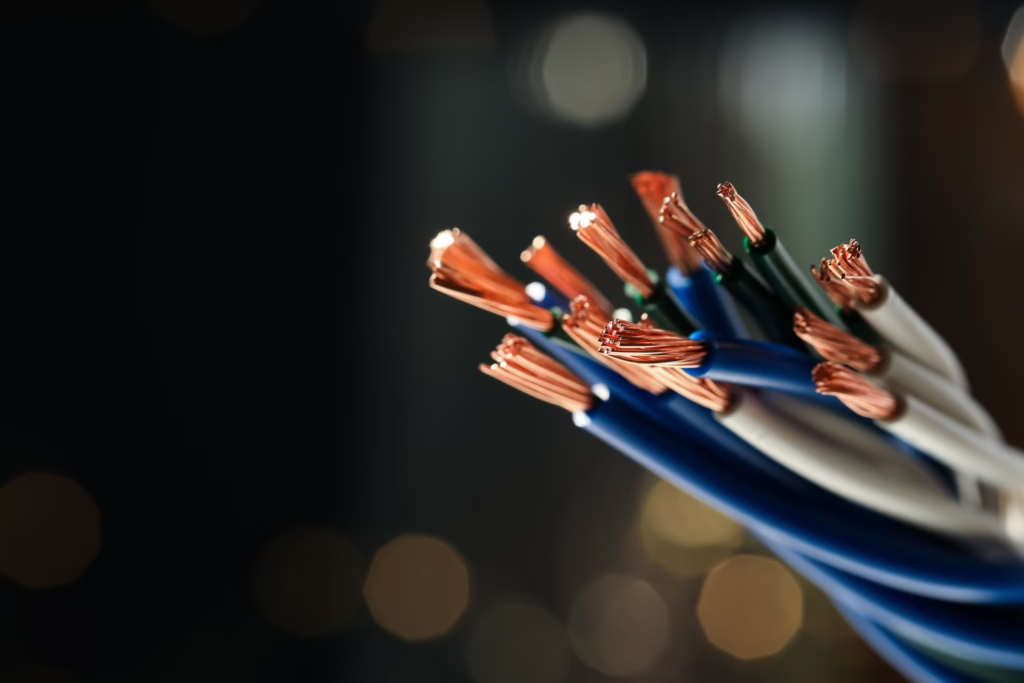
As the UK moves towards a fully digital future, understanding the difference between fibre and copper broadband, is highly important, especially with the ongoing Copper Switch Off.
At Wildanet, we work with rural communities every day who are transitioning away from legacy copper networks to faster, more reliable full fibre. Here’s what you need to know about fibre vs copper:
What is the Copper Switch Off?
The Copper Switch Off refers to the planned retirement of the UK’s traditional copper-based telephone network (PSTN and ISDN), which has been in use for decades but can no longer meet modern connectivity demands.
As part of this transition, new copper-based services stopped being sold in 2023, and the network is set to be fully switched off by January 2027.
This shift means that landline services will move to digital technology, with calls delivered via Voice over Internet Protocol (VoIP), using an internet connection rather than traditional phone lines.
At the same time, broadband services will increasingly rely on full fibre and other modern technologies, as copper infrastructure is phased out in favour of faster, more reliable connectivity.

Speed and Reliability Difference
Fibre (Full Fibre / FTTP)
Fibre has faster download and upload speeds and is considered to be more reliable with fewer faults. Also, fibre is not affected by distance in the way copper is.
Full fibre connects directly to your property and is widely considered the most future-proof option
Copper (ADSL and Part-Fibre / FTTC)
Copper has slower speeds, especially further from the exchange, and this performance degrades over distance. As well, more prone to interference and faults.
How The Copper Switch Off Impacts Consumers and Small Businesses
You may need to upgrade
If you’re currently using copper-based broadband (such as ADSL or FTTC), you will eventually need to transition to a full fibre. Planning ahead can help avoid last-minute disruption, particularly for businesses that rely on stable connectivity.
Improved performance
Switching to full fibre delivers faster speeds and more consistent performance without disruptions. This is especially important for households and businesses relying on streaming, video calls, remote working, and cloud-based systems. For small businesses, this can mean improved productivity, better customer experience, and the ability to scale operations more effectively.
Equipment changes
The transition may require some updates to your existing setup. Traditional landline phones will need to connect via a VoIP service, which may involve adapters or new handsets. Broadband routers may also need upgrading to support full fibre connections.
Opportunity to future-proof
Rather than being disruptive, the copper switch-off actually offers an opportunity to upgrade to more reliable connectivity. Full fibre networks are better equipped to handle increasing data demands, making them a long-term solution for both homes and growing businesses.

Why This Matters for Rural Areas
Rural communities have relied more heavily on copper networks, which often struggle to deliver consistent performance due to long distances between properties and exchanges, lower levels of infrastructure investment, and slower average speeds compared to urban areas.
This makes full fibre rollout especially important for rural areas. By replacing copper networks with full fibre infrastructure, Wildanet can deliver faster, more reliable connectivity to rural homes and businesses, helping support long-term economic growth.
At Wildanet, we focus on delivering full fibre broadband to hard-to-reach rural areas, helping to bridge the digital divide and future-proof connectivity.
Our approach is centred on replacing outdated copper infrastructure with future-ready fibre networks, providing reliable, high-speed connectivity where it’s needed most, and supporting rural homes and businesses through the copper switch off transition.
We also work closely with local communities to ensure they understand what changes are coming, what options are available to them, and how they can upgrade with minimal disruption.
Fibre vs Copper
| Feature | Fibre Broadband | Copper Broadband |
| Technology | Light signals | Electrical signals |
| Speed | Very fast (up to 1Gbps+) | Limited |
| Reliability | High | Lower |
| Distance impact | Minimal | Significant |
| Future-ready | Yes | No (being phased out) |
With the UK’s copper network being phased out, now is the time to understand your options and prepare for the future. Fibre broadband offers the speed, reliability, and scalability that modern homes and businesses need, particularly in rural areas.
Frequently Asked Questions
Will the copper switch off affect my broadband?
Yes, if your broadband currently relies on copper infrastructure (such as ADSL or FTTC), it will be affected over time as the UK phases out the copper network by 2027.
Is FTTC being discontinued?
FTTC (Fibre to the Cabinet) is not being switched off immediately, but it relies partly on copper infrastructure, so it will be phased out as part of the wider copper switch-off. Over time, it will be replaced by full fibre (FTTP) and other modern broadband solutions.
Can I keep my copper broadband?
No, copper-based broadband services will not be supported long term. As the network is retired, you will need to upgrade to a fibre or digital alternative. Upgrading early can help ensure a smoother transition and access to faster, more reliable connectivity